
Search
A diagnosis of an autism spectrum condition (autism) provides limited information regarding an individual’s level of functioning, information key in determining support and funding needs.
Recent studies have reported that strengths-based programs, leveraging autistic adolescents' abilities and interests, could improve their skills and facilitate social engagement. However, little is known about the long-term impact of strengths-based approaches. This study aimed to explore the long-term outcomes of community strengths-based programs designed to support autistic adolescents in developing interests and skills in Science, Technology, Engineering, Arts, and Mathematics (STEAM) and the factors influencing their participation in these programs.
A comparison of parents’ experiences of getting a diagnosis for their child with autism, attention deficit hyperactivity disorder (ADHD) and both diagnoses can inform our understanding of common and unique themes across these neurodevelopmental conditions.
Our previous cross-sectional investigation (Chetcuti et al., 2020) showed that infants with autism traits could be divided into distinct subgroups based on temperament. This longitudinal study builds on this existing work by exploring the continuity of temperament subgroup classifications and their associations with behavioral/clinical phenotypic features from infancy to toddlerhood.
To evaluate the participation difficulties experienced by children with developmental coordination disorder in home, school, and community environments.
The heterogeneity of autism spectrum disorder clinically and aetiologically hinders intervention matching and prediction of outcomes. This study investigated if the behavioural, sensory, and perinatal factor profiles of autistic children could be used to identify distinct subgroups. Participants on the autism spectrum aged 2 to 17 years and their families were sourced via the Australian Autism Biobank.
Most support programmes for Autistic children are available only after they are diagnosed. Research suggests that parenting supports may be helpful for parents and their infants, when provided in the first 2 years of life - before a formal diagnosis is given, but when information suggests an infant is more likely to be Autistic. However, we do not know how acceptable these types of supports might be to the Autistic and autism communities.
A problem that applied researchers and practitioners often face is the fact that different institutions within research consortia use different scales to evaluate the same construct which makes comparison of the results and pooling challenging.
CliniKids is the first clinical service of The Kids Research Institute Australia, providing autism therapies and supports for young children.
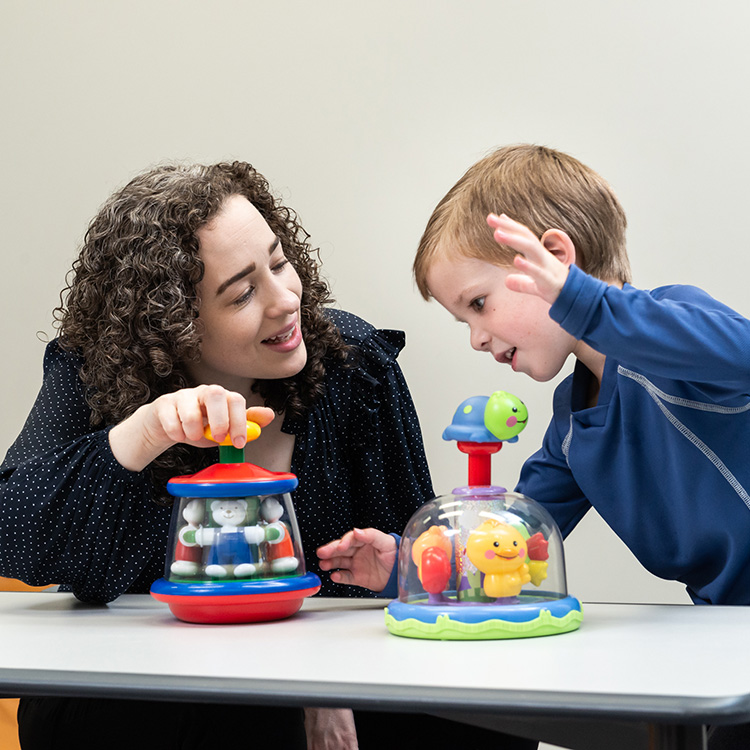
CliniKids is a not-for-profit centre integrating world-class research with a clinical service for children with developmental delay and/or autism, and their families. It is the first of its kind for autism in Australia.