Skip to content

Search

Protocol for a nested case-control study design for omics investigations in the Environmental Determinants of Islet Autoimmunity cohort

The Environmental Determinants of Islet Autoimmunity (ENDIA) pregnancy-birth cohort investigates the developmental origins of type 1 diabetes (T1D), with recruitment between 2013 and 2019. ENDIA is the first study in the world with comprehensive data and biospecimen collection during pregnancy, at birth and through childhood from at-risk children who have a first-degree relative with T1D.

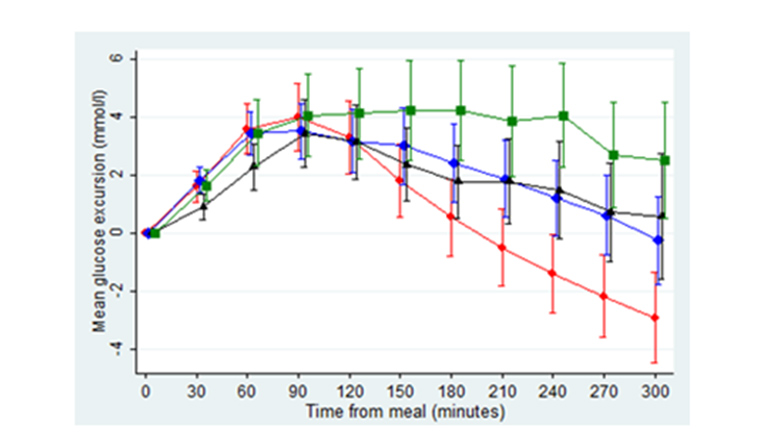
Efficacy of the MiniMed™ 670G hybrid closed loop system in managing postprandial glucose excursion with high protein high fat foods in children and adolescents under free-living conditions

High protein high fat meals are considered “difficult” foods because they can cause prolonged hyperglycemia after ingestion. The potential of hybrid closed loop therapy in managing postprandial glucose excursions with these difficult foods remains unknown. This pilot study aimed to explore the impact of manual mode in standard insulin pump therapy and auto mode with hybrid closed loop pump therapy in managing glucose excursions caused by HPHF foods and to obtain feedback from families about each mode.

Transition models of care for type 1 diabetes: a systematic review

Managing the care regimen for Type 1 Diabetes is challenging for emerging adults, as they take on greater responsibility for self-management. A diverse range of models of care have been implemented to improve safety and quality of care during transition between paediatric and adult services. However, evidence about acceptability and effectiveness of these is limited.

Childhood-onset type 1 diabetes in Western Australia: An update on incidence and temporal trends from 2001 to 2022

To determine the incidence and incidence trends over 2001-2022 of childhood-onset type 1 diabetes (T1D) in Western Australia and assess the impact of the COVID-19 pandemic.

Association of Achieving Time in Range Clinical Targets With Treatment Modality Among Youths With Type 1 Diabetes

Continuous glucose monitoring (CGM) devices have demonstrated efficacy in adults and more recently in youths and older adults with type 1 diabetes. In adults with type 1 diabetes, the use of real-time CGM compared with intermittently scanned CGM was associated with improved glycemic control, but there are limited data available for youths. 

ISPAD Clinical Practice Consensus Guidelines 2022: Exercise in children and adolescents with diabetes

Liz Davis MBBS FRACP PhD Co-director of Children’s Diabetes Centre Co-director of Children’s Diabetes Centre Professor Davis is a paediatric

“Sometimes Our Mob Don't Really Take It Serious Until It's Serious”: The Experiences of Western Australian Aboriginal Adolescents Living With Type 2 Diabetes, Their Parents, and Their Family Members

In Australia, Aboriginal children experience disproportionate rates of type 2 diabetes (T2D) compared with non-Aboriginal children. The aim of this qualitative study was to explore the experiences of Aboriginal adolescents with T2D and their family members to better understand the influences of T2D on self-management, with findings used to inform an enhanced service model of care.

Mapping care provision for type 1 diabetes throughout Australia: a protocol for a mixed-method study

Type 1 diabetes (T1D) is a chronic and incurable autoimmune disease, diagnosed in early childhood and managed initially in paediatric healthcare services. In many countries, including Australia, national audit data suggest that management and care of T1D, and consequently glycaemic control, are consistently poor.

The Cost of Control: Cost-effectiveness Analysis of Hybrid Closed-Loop Therapy in Youth

Hybrid closed-loop (HCL) therapy is an efficacious management strategy for young people with type 1 diabetes. However, high costs prevent equitable access. We thus sought to evaluate the cost-effectiveness of HCL therapy compared with current care among young people with type 1 diabetes in Australia.

Suboptimal glycemic control in adolescents and young adults with type 1 diabetes from 2011 to 2020 across Australia and New Zealand: Data from the Australasian Diabetes Data Network registry

Competing challenges in adolescence and young adulthood can distract from optimal type 1 diabetes (T1D) self-management, and increase risks of premature morbidity and mortality. There are limited data mapping the glycemic control of people with T1D in this age group, across Australasia.