
Search

The Wal-yan Respiratory Research Centre is seeking expressions of interest from Western Australians to join an Antimicrobial Resistance (AMR) Community Reference Group, to provide vital community perspectives on the research activities into this global health concern.

Researchers from the Wal-yan Respiratory Research Centre are aiming to combine artificial intelligence with natural, infection-fighting viruses to help save lives from an increasingly common medical emergency found in hospitals.
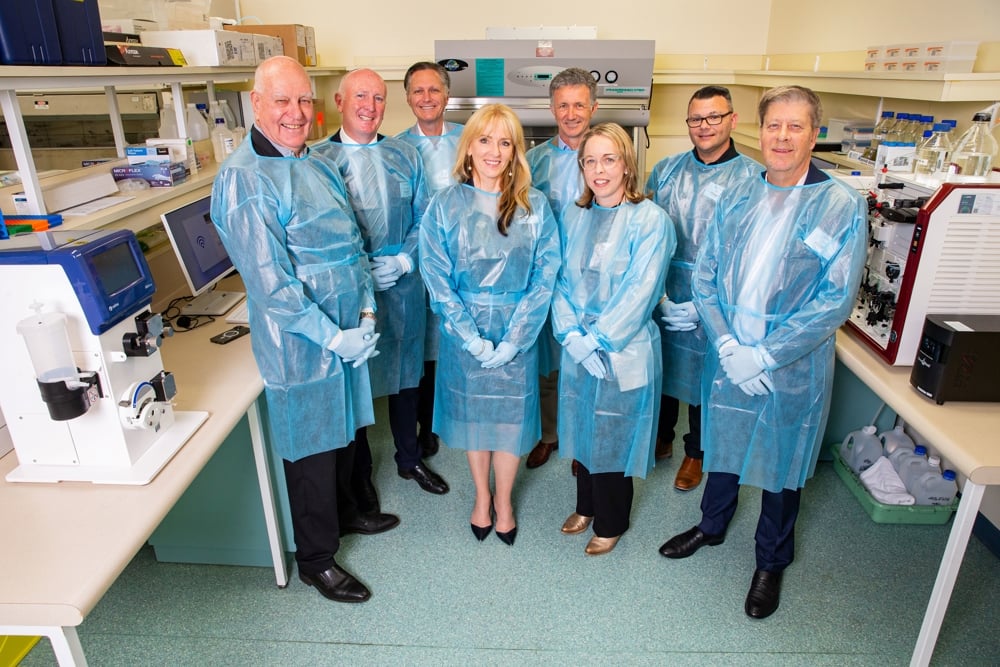
Patients battling antibiotic-resistant superbugs will soon have access to life-saving WA-made therapies that could help treat lung, skin and ear infections as well as bacterial infections like Golden Staph. Western Australia's inaugural phage manufacturing facility – spearheaded by a team at the
Burkholderia cepacia complex causes life-threatening respiratory infections. Here, a bacteriophage with activity against B. cenocepacia was isolated from wastewater. It has a genome size of 70,144 bp and has the taxonomic classification Irusalimvirus. It has no genes associated with lysogeny, bacterial resistance, or virulence.
Burkholderia cepacia complex is a cause of serious lung infections in people with cystic fibrosis, exhibiting extremely high levels of antimicrobial resistance. These infections are difficult to treat and are associated with high morbidity and mortality.
A population of neutrophils recruited into cystic fibrosis (CF) airways is associated with proteolytic lung damage, exhibiting high expression of primary granule exocytosis marker CD63 and reduced phagocytic receptor CD16. Causative factors for this population are unknown, limiting intervention. Here we present a laboratory model to characterize responses of differentiated airway epithelium and neutrophils following respiratory infection.
Neutrophil elastase is a significant risk factor for structural lung disease in cystic fibrosis, and Pseudomonas aeruginosa airway infection is linked with neutrophilic inflammation and substantial respiratory morbidity. We aimed to evaluate how neutrophil elastase (NE) activity changes after P. aeruginosa eradication and influences early disease outcomes. We assessed participants in the AREST CF cohort between 2000 and 2018 who had P. aeruginosa cultured from their routine annual bronchoalveolar lavage (BAL) fluid and who underwent eradication treatment and a post eradication BAL. Factors associated with persistent P. aeruginosa infection, persistent neutrophilic inflammation following eradication and worse structural lung disease one year post-eradication were evaluated.