
Search
Treatment strategies for juvenile idiopathic arthritis (JIA) have shifted significantly over the last 20 years. We examined the effect of the introduction of government-subsidised TNF inhibitor (TNFi) treatment on incident hospitalisation for JIA.
Trailblazing Aboriginal doctor and health researcher Professor Alex Brown has been made a Fellow of the Australian Academy of Technological Sciences and Engineering (ATSE) in recognition of his leadership in ensuring Indigenous peoples are at the forefront of genomics efforts nationally and internationally.
Overweight and obesity in children continues to increase. Yet, the role of active transport, namely walking, in mitigating these trends remains unclear. This study examined the cross-sectional association between walkability and children's Body Mass Index (BMI) and how this varies by socio-economic and lifestyle characteristics.
Determine if exercise interventions, beyond what is already provided to children and preschool children, improve bone health and reduce fracture incidence.
Family-based lifestyle interventions for children/adolescents with severe levels of obesity are numerous, but evidence indicates programs fail to elicit short- or longer-term weight loss outcomes. Families with lived experience can provide valuable insight as we strive to improve outcomes from programs. Our aim was to explore elements that families desired in a program designed to treat severe levels of obesity in young people.
The association between early-life respiratory syncytial virus infections and later respiratory morbidity is well established. However, there is limited evidence on factors that influence this risk. We examined sociodemographic and perinatal factors associated with later childhood respiratory morbidity requiring secondary care following exposure to a laboratory-confirmed RSV episode in the first 2 years.
To assess potential benefits and direct healthcare cost savings with expansion of an existing childhood influenza immunisation program, we developed a dynamic transmission model for the state of Western Australia, evaluating increasing coverage in children < 5 years and routinely immunising school-aged children.
Examine the reliability of field-based fitness assessments in school-aged children with emotional or behavioral difficulties (EBD). Understanding the impact of fitness on physical activity participation for children with EBD is limited by our ability to reliably measure it.
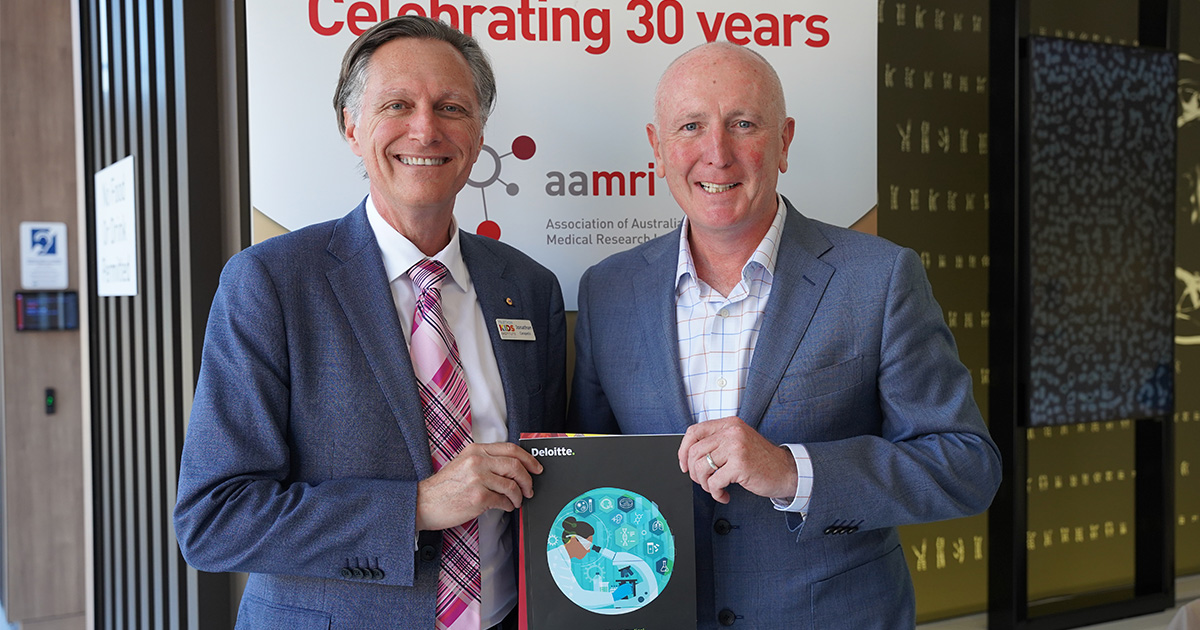
The Kids Research Institute Australia has welcomed a landmark report which reveals every dollar invested in WA’s medical research sector is more than doubled when it comes to return on investment to our economy.
Genomic sequencing in congenital heart disease (CHD) patients often discovers novel genetic variants, which are classified as variants of uncertain significance (VUS). Functional analysis of each VUS is required in specialised laboratories, to determine whether the VUS is disease causative or not, leading to lengthy diagnostic delays.