
Search
Early supports to enhance social development in children with autism are widely promoted. While oxytocin has a crucial role in mammalian social development, its potential role as a medication to enhance social development in humans remains unclear.
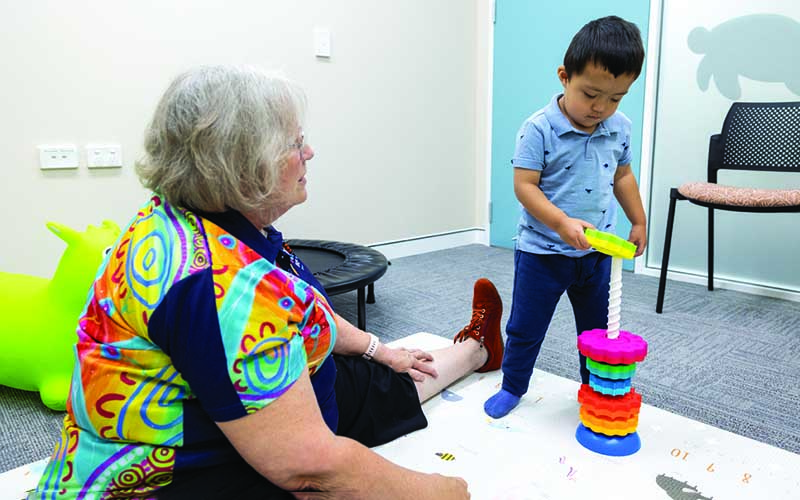
Discover how this family is benefitting from CliniKids' evidence-based therapies.
We do not know much about what support services people think are okay for young autistic children. This study was a survey of 253 people. We asked autistic adults, parents, and professionals from Australia and New Zealand whether they thought it was okay to provide support services to autistic children.
Autistic children have an increased likelihood of anxiety, but more research is needed on the characteristics that predict various types of anxiety in this population.
Autism and attention-deficit/hyperactivity disorder (ADHD) often co-occur. This survey of 288 New Zealand parents of children diagnosed with autism, ADHD, or both conditions, examined the relations between age of diagnosis and early atypical development, the age specialist consultation was needed and types of specialists seen.
Autism spectrum disorders are complex, with a strong genetic basis. Genetic research in autism spectrum disorders is limited by the fact that these disorders are largely heterogeneous so that patients are variable in their clinical presentations. To address this limitation, we investigated the genetics of individual dimensions of the autism spectrum disorder phenotypes, or autistic-like traits. These autistic-like traits are continuous variations in autistic behaviours that occur in the general population.
The diagnostic experiences of autistic adults in New Zealand have not been investigated and little is known globally about autistic adults' satisfaction with the autism diagnostic process. This study describes the diagnostic experiences of 70 autistic adults living in New Zealand and explores how these experiences are related to satisfaction during three stages of the diagnostic process. The results show that autistic adults were reasonably satisfied with the early query and diagnostic assessment stages, but were dissatisfied with the post-diagnostic support stage, with significant unmet needs. Dissatisfaction during the post-diagnostic support stage was also related to satisfaction during previous stages and poor coordination of supports. Suggestions are made on how to improve the autism diagnostic pathway for autistic adults in New Zealand.
A balanced approach toward sun exposure and protection is needed by young people. Excessive sun exposure increases their risk for skin cancers such as melanoma, whereas some exposure is necessary for vitamin D and healthy bones. We have developed a new iOS smartphone app-Sun Safe-through a co-design process, which aims to support healthy and balanced decision-making by young teenagers (aged 12-13 years).
Evidence suggests that individuals with autism spectrum disorder have increased rates of co-occurring psychosis and/or bipolar disorder. Considering the peak age of onset for psychosis and bipolar disorder occurs in adulthood, we investigated the co-occurrence of these disorders in adults with autism.
Emerging research suggests that seeking an autism diagnosis as an adult is usually difficult and time-consuming but brings relief once a diagnosis is made. This study explored the experience of the pathway to an autism diagnosis during adulthood for adults living in Australia.