
Search
Estimating the temporal trends in infectious disease activity is crucial for monitoring disease spread and the impact of interventions. Surveillance indicators routinely collected to monitor these trends are often a composite of multiple pathogens. For example, "influenza-like illness"-routinely monitored as a proxy for influenza infections-is a symptom definition that could be caused by a wide range of pathogens, including multiple subtypes of influenza, SARS-CoV-2, and RSV.
Since its inception in 2005, the US President's Malaria Initiative (PMI) has played a major role in the reductions in malaria morbidity and mortality observed across Africa. With the status of PMI funding and operations currently uncertain, we aimed to quantify the impact that a fully functioning PMI would have on malaria cases and deaths in Africa during 2025.
Cases identified through mass testing represent only a fraction of infections, depending on the propensity of infected individuals to seek testing. Quantifying the variation in test-seeking behaviour through time or between population subgroups provides important information on testing uptake and supports epidemiological analyses of case data that may otherwise be biased.
Skin conditions most frequently encountered in paediatric practice include infections, infestations, atopic dermatitis, and acne. Skin of colour refers to skin with increased melanin and darker pigmentation, and reflects global racial and ethnic diversity.
In high-transmission areas, school-aged children have higher malaria prevalence and contribute significantly to the transmission reservoir. Malaria infections can be asymptomatic or present with symptoms which may contribute to anaemia, severe illness and fatal malaria. This analysis provides trends of malaria prevalence and associated risk factors among school-aged children in mainland Tanzania.
Arboviruses transmitted mainly by Aedes (Stegomyia) aegypti and Ae. albopictus, including dengue, chikungunya, and Zika viruses, and yellow fever virus in urban settings, pose an escalating global threat. Existing risk maps, often hampered by surveillance biases, may underestimate or misrepresent the true distribution of these diseases and do not incorporate epidemiological similarities despite shared vector species.
Since its emergence in 1968, influenza A H3N2 has caused yearly epidemics in temperate regions. While infection confers immunity against antigenically similar strains, new antigenically distinct strains that evade existing immunity regularly emerge ('antigenic drift'). Immunity at the individual level is complex, depending on an individual's lifetime infection history.
Although most people born this century will be educated in African schools, these schools often lack basic infrastructure, such as electricity and/or lighting. In the face of a rapidly growing school-age population in Africa, the electrification of educational facilities is not just an infrastructural challenge but also a pivotal investment in the continent’s future workforce.
Knowing when and where infected mosquitoes bite is required for estimating accurate measures of malaria risk, assessing outdoor exposure, and designing intervention strategies. This study combines secondary analyses of a human behaviour survey and an entomological survey carried out in the same area to estimate human exposure to malaria-infected Anopheles mosquitoes throughout the night in rural villages in south-eastern Tanzania.
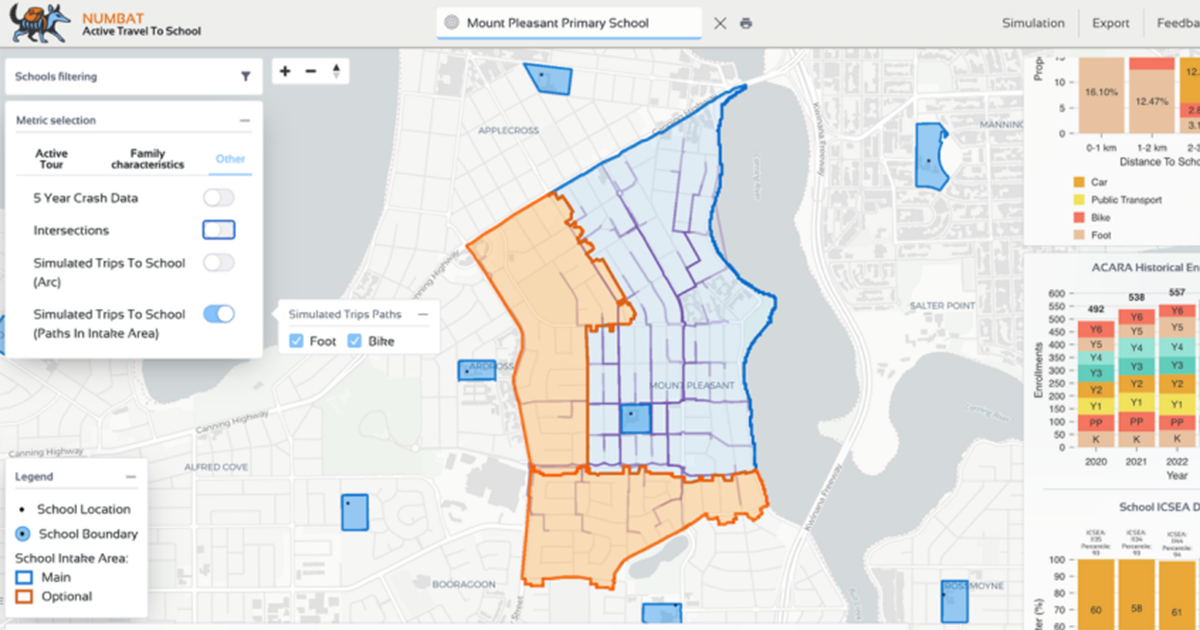
A powerful new digital modelling tool is helping tackle an emerging challenge in children’s health – the dramatic decline in walking and cycling to school.