
Search
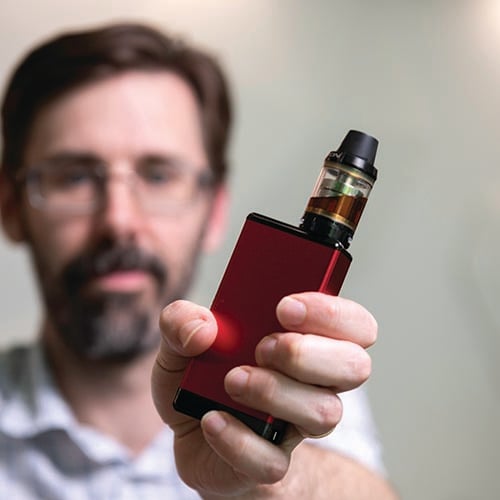
Research into the potential health impacts of vaping is starting to back up concerns that electronic cigarettes (e-cigarettes) are not as benign as many people think.
Recent studies have demonstrated that some children with acute bronchiolitis can be successfully managed using home oxygen therapy.
The aim of this study was to document the likely interpretative effects of changing from commonly used current spirometry reference equations to the GLI2012...
Cystic fibrosis (CF) lung disease commences early in the disease progression and is the most common cause of mortality.
We aimed to ascertain the fit of the European Respiratory Society Global Lung Initiative 2012 reference ranges to contemporary Australasian spirometric data.
Prediction bias in spirometry reference equations can arise from combining equations for different age groups,...
In this review, we have examined the role of lung function testing in infants and preschool children with CF.
In infants and children with chronic respiratory disease, hypoxia is a potential risk of aircraft travel.
Children are particularly vulnerable to air pollution, but the effects of early life exposure to acute, high-intensity pollution on later lung function remain poorly understood. We assessed the association between prenatal or infant exposure to fire-related fine particulate matter (PM2.5) from a six-week coal mine fire and subsequent lung function.
To better characterise prematurity-associated lung disease, adult spirometry phenotype classifications (obstructive lung disease, preserved ratio impaired spirometry and dysanapsis) have been applied to children born preterm. It is unknown how these phenotypes track over time.