
Search
Mesothelioma is a cancer derived from mesothelial cells, most commonly arising from the pleura or the peritoneum. Immune checkpoint therapy (ICT) has shown survival benefit for pleural mesothelioma, but little is known about the response in peritoneal mesothelioma. Most preclinical mesothelioma models involve subcutaneous cancer cell implantation, which lacks the relevant tumour microenvironment of peritoneal mesothelioma and does not resemble the clinical presentation.
To describe the perspectives of Aboriginal and Torres Strait Islander peoples and health care workers on genomics in cancer care to inform the National Framework for Genomics in Cancer Control (the Framework).
T cells engineered to express chimeric antigen receptors (CARs) are a promising modality to treat refractory cancers. CD19 CAR-T therapy has achieved remarkable responses in against B-cell lymphomas, however, challenges persist for acute myeloid leukemia (AML) and solid malignancies. B7H3 is an immune regulatory molecule that is highly expressed in various tumor cells. Its abnormal expression in acute AML and esophageal squamous cell carcinoma (ESCC) is closely related to tumor progression.
Cold atmospheric plasma (CAP) is a safe and effective alternative to radiotherapy for cancer treatment. Its anticancer effects are attributed to increased intracellular reactive oxygen species (ROS). Glutathione, a key antioxidant derived from glutamine, is critical for cell proliferation. This study investigated whether CAP-induced ROS elevation results from reduced glutamine-glutathione conversion and elucidates the underlying mechanisms.
In Australia, cancer medicine is increasingly guided by our expanding knowledge of cancer genomics (the study of genetic information) and biology. Personalized treatments and targets are often defined by an individual’s genetic profile—known as precision cancer medicine. The translation of genomics-guided precision therapeutics from bench to bedside is beginning to produce real clinical benefits for Australians living with cancer.
Due to an advanced understanding of cancer biology and the rapid development of genomic technologies, cancer has shifted from 200 diseases based on pathology (i.e., what a tumor looks like under the microscope) to thousands of diseases based on molecular tumor profiles (i.e., what a tumor looks like when its altered genome is interrogated). Most cancers arise from alterations to the genome, including changes in the number or structure of chromosomes and variations in a single building block of the genetic code.
Glioblastoma, a lethal high-grade glioma, has not seen improvements in clinical outcomes in nearly 30 years. Ion channels are increasingly associated with tumorigenesis, and there are hundreds of brain-penetrant drugs that inhibit ion channels, representing an untapped therapeutic resource. The aim of this exploratory drug study was to screen an ion channel drug library against patient-derived glioblastoma cells to identify new treatments for brain cancer.
Acute lymphoblastic leukaemia is the most common childhood malignancy that remains a leading cause of death in childhood. It may be characterised by multiple known recurrent genetic aberrations that inform prognosis, the most common being hyperdiploidy.

Four The Kids Research Institute Australia researchers have received prestigious fellowships and four significant cohort studies led or co-led by The Kids have received key grants under two new funding programs supported by the State Government’s Future Health Research and Innovation (FHRI) Fund.
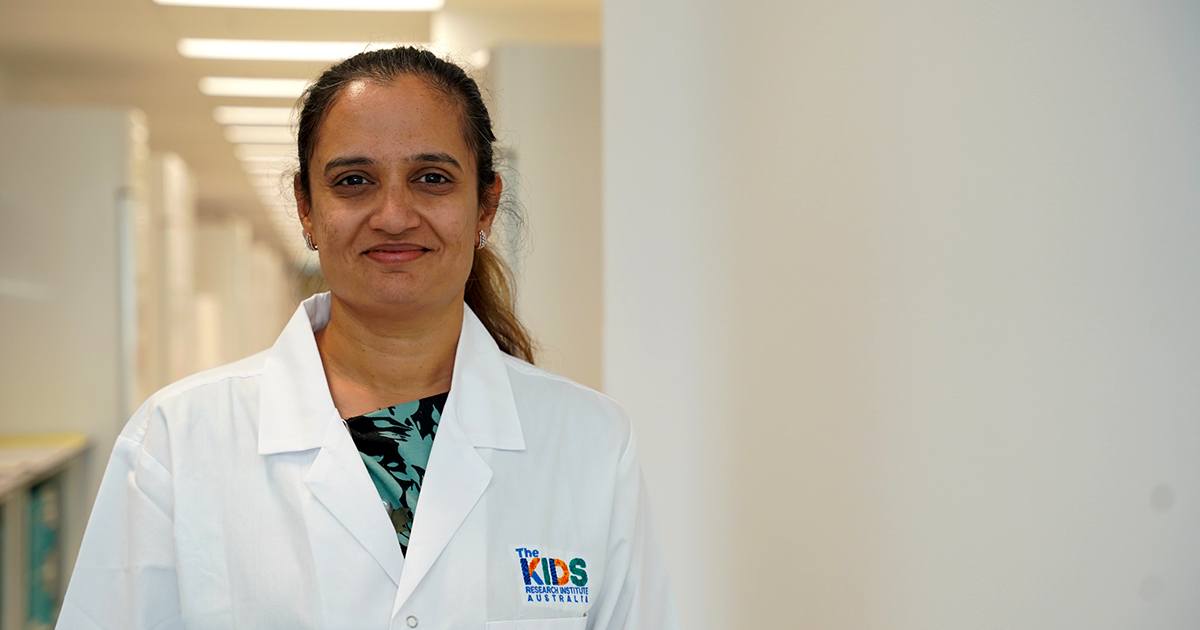
A landmark study led by Dr Hetal Dholaria, The Kids Research Institute Australia researcher and Perth Children’s Hospital Oncologist, has confirmed that a “wait and watch” approach for newborns diagnosed with neuroblastoma is not only safe, but effective over the long term.