Skip to content
The Kids Research Institute Australia logo
Donate

No results yet

Search

Research

Physical Activity-Related Practices and Psychosocial Factors of Childcare Educators: A Latent Profile Analysis

Limited research investigates early childhood education and care (ECEC) educators' involvement in promoting physical activity. The aim was to identify distinct profiles based on physical activity-related practices and psychosocial factors in ECEC educators and examine how they relate to the amount of time allocated to children's physical activity. A secondary analysis of educator-reported survey data from the Play Active study was undertaken.

Research

Association between preschooler outdoor play and home yard vegetation as measured by high resolution imagery: Findings from the PLAYCE study

Outdoor play in the home yard is an important source of physical activity for many preschoolers. This study investigated if home yard size and vegetation are related to preschooler outdoor play time.

Research

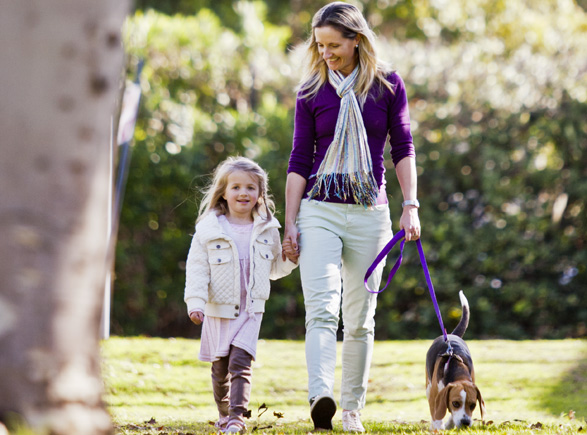
A study protocol for a randomised controlled trial to evaluate the effectiveness of a dog-facilitated physical activity minimal intervention on young children's physical activity, health and development: the PLAYCE PAWS trial

Pet ownership brings many health benefits to individuals. In children developmental benefits can extend to improved self-esteem, better social competence and decreased loneliness. The majority of households with children own a dog, however only a small proportion of children gain the benefits of dog ownership through dog walking and play. There are few intervention studies investigating the impact of dog-facilitated physical activity in children. The PLAYCE PAWS study aims to test a minimal-contact intervention through the use of mobile health ("mhealth") strategies, i.e. text (SMS) messages, to parents to encourage their children to walk and play with their dog more, and evaluate the impact on children's overall physical activity and development.

Research

Play Active Program – physical activity policy and training for Early Childhood Education and Care

Play Active is a national, low-cost, evidence-based program to boost energetic play in early childhood education and care. It offers free professional development for educators.

PLAYCE

With rising levels of physical and mental health issues, ensuring children establish good physical activity behaviours early in life is more important than ever.

Research

Restricting outdoor advertising of unhealthy food: can Australia's food category-based classification system be applied consistently?

Most outdoor food advertising (e.g. billboards and bus stops) features foods that are considered unhealthy. The most important technical challenge when designing policies to restrict unhealthy outdoor food advertising is defining 'unhealthy food'. To date, most restriction policies have used nutrient profiling models (i.e. foods are classified according to their nutritional composition) to determine which foods and beverages may be advertised. In Australia, state governments have endorsed a food category-based classification system, with no prescribed nutrient limits, which may create ambiguity when multiple users are identifying food advertisements to be restricted.