Search
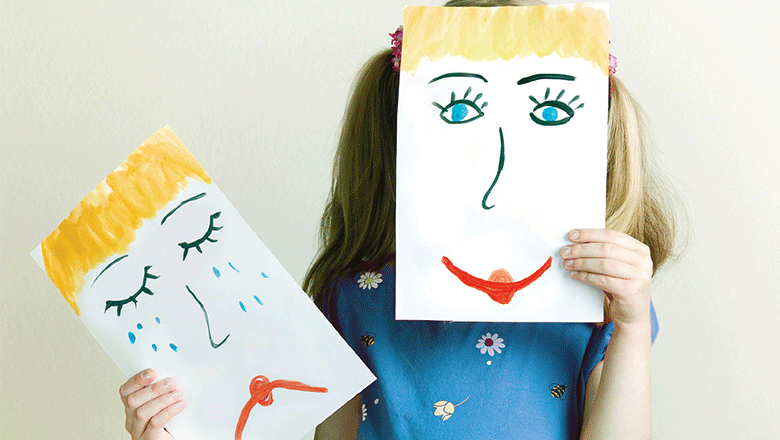
It's normal for children and teenagers to experience a range of emotions, including sadness, however childhood depression is more than just feeling sad.
Research
Involving young people with lived experience in advancing mental health science: an exploratory qualitative study from Pakistan and IndiaMeaningful involvement of young People with Lived Experience (PWLE) in co-designing youth mental health interventions has been much emphasized globally. However, there is a scarcity of evidence on involving PWLE of mental health problems in designing, implementing and evaluating mental health interventions, especially in Low- and Middle-Income Countries.
Research
Assessing functioning for individuals with neurodevelopmental conditions: Current clinical practice in AustraliaIn the disability sector globally, and specifically in Australia, assessments of functioning have become key to diagnostic processes, and accessing therapy and funding. Over half of all individuals accessing support through Australia's National Disability Insurance Scheme have a neurodevelopmental condition diagnosis.
Research
Intersex adolescents seeking help for their depression: the case study of SPARX in New ZealandSPARX is a computerized cognitive behavioral therapy self-help program for adolescent depression that is freely available in New Zealand. At registration, users identify themselves as either male, female, intersex, or transgender. We aimed to describe the mental health of adolescent intersex users. A secondary analysis of SPARX usage data over 5 years.
Research
Prevalence and treatment of psychiatric disorders other than psychosis in children and adolescents with 22q11DS: Examining associations with social and role functioningThe aim of this study was to investigate the prevalence and treatment of non-psychotic psychiatric disorders
Research
Psychosocial characteristics and predictors of health-care use in families of young children with cystic fibrosis in Western AustraliaThis study aimed to identify psychosocial predictors in cystic fibrosis that may inform intervention strategies.
Research
Early markers of adult symptoms of depression and anxiety in the Raine StudyEarly intervention offers the potential to mitigate adult mental illness; however, trials spanning decades present significant challenges, necessitating predictive early markers useable in trial settings. We hypothesised that parent evaluation using the child behaviour checklist (CBCL) total problem score at age two years predicted adult depressive and anxious symptoms and explored other potential parent ratings.
Research
Maternal diet, depression and antidepressant treatment in pregnancy and across the first 12 months postpartum in the MPEWS pregnancy cohort studyThere is increasing interest in the association between perinatal depression and diet including whether diet may have an impact on depressive symptoms and equally whether depression influences diet. Furthermore, whether pharmacological treatment of depression with antidepressant medication also may influence diet.
Research
Consumption of energy drinks is associated with depression, anxiety, and stress in young adult males: Evidence from a longitudinal cohort studyEnergy drinks (EDs) claim to boost mental performance, however, few studies have examined the prospective effects of EDs on mental health. This study examined longitudinal associations between ED use and mental health symptoms in young adults aged 20 years over a 2-year period.
Research
Group mindful self-compassion training to improve mental health outcomes for LGBTQIA+ young adults: Rationale and protocol for a randomised controlled trialYoung adults who are lesbian, gay, bisexual, trans, queer or questioning, intersex, asexual and other diverse genders and sexualities (LGBTQIA+) are more likely to experience mental health difficulties and are at significantly elevated risk of substance abuse, self-harm and suicide, relative to their heterosexual, endosex and cisgender peers. There is a need for effective mental health interventions for LGBTQIA+ young adults. Mindful Self-Compassion training is a promising approach; among LGBTQIA+ individuals, self-compassion accounts for more variation in mental health outcomes than bullying, victimization, and adverse childhood experiences combined. Furthermore, LGBTQIA+ individuals with high self-compassion report more positive identity and happiness, less self-stigma, and lower suicidality than those with low self-compassion.