
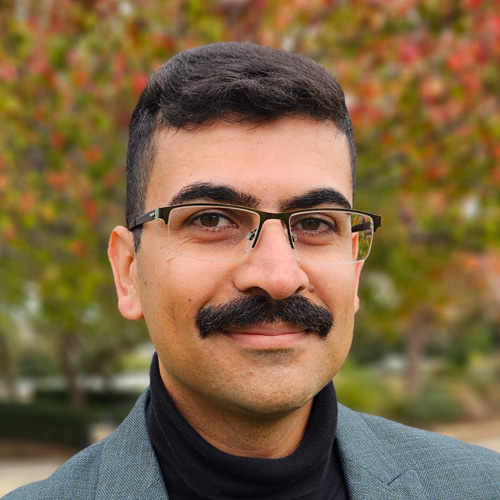
Mahdi Mazidi
Senior Research Officer
PhD (Psychology)
mahdi.mazidi@thekids.org.au
http://linkedin.com/in/mahdi-mazidi-5392241a9Mahdi Mazidi is a Senior Research Officer at The Kids Research Institute Australia and an Adjunct Researcher at the School of Psychological Science, University of Western Australia. He completed his PhD at the Centre for the Advancement of Research on Emotion (CARE) at UWA, where he also worked for three years as a Research Fellow.
Mahdi has published widely on the cognitive mechanisms underlying emotional wellbeing and perinatal mental health. His research draws on a wide range of methodologies, including experimental psychopathology methods using cognitive bias assessment tasks, large-scale surveys, and longitudinal analyses. He has delivered over 30 presentations and invited talks at national and international scientific conferences and leading institutions. Mahdi also maintains an active portfolio of teaching and student supervision, having successfully supervised students at the Honours and PhD levels.
His current research focuses on leveraging national longitudinal datasets to examine how fathers’ mental health and caregiving involvement influence their children’s wellbeing across development.
Education and Qualifications
- PhD in Psychology – The University of Western Australia (2022)
- M.Sc. in Clinical Psychology – The University of Social Welfare and Rehabilitation Sciences (2016)
- B.S. in Clinical Psychology, Shahid Beheshti University (2013)
Awards/Honours
- 2024 – Selected to attend the fully funded Primal World Beliefs Conference at the University of Pennsylvania, a competitively awarded gathering of researchers working on Beliefs and belief assessments
- 2024 – Best Early Career Supervisor Award, Centre for the Advancement of Research on Emotion, University of Western Australia
- 2023 – Granted Australian Permanent Residence through the Global Talent Program (Health Industries Sector) – a prestigious and highly competitive pathway recognising individuals with exceptional achievements
- 2023 - Raine Medical Research Foundation - Research Collaboration Award - Australia, Chief Principal Investigator
- 2023 – University of Western Australia Research Collaboration Award - Chief Principal Investigator
- 2019 & 2021 – Highest Impact Factor PhD Publication Award, Centre for the Advancement of Research on Emotion, University of Western Australia
- 2014–2015 – Award for Academic Excellence, Iran’s National Elite Foundation – included monthly scholarships and a research grant
Active Collaborations
- Ongoing collaboration with the Centre for the Advancement of Research on Emotion (UWA), examining cognitive mechanisms underlying emotional vulnerability
- Collaborative work with the Positive Psychology Center at the University of Pennsylvania on primal world beliefs and innovative methods of belief assessment
- Collaboration with UNSW and University Frankfurt examining the role of prenatal expectations in perinatal mental health
Published research
Repetitive negative thinking during pregnancy - The role of biased information seeking and negative prenatal expectations
Repetitive Negative Thinking (RNT) during pregnancy is a key risk factor for psychopathology in the perinatal period. However, the cognitive mechanisms underlying prenatal RNT remain poorly understood. Recent research has suggested that a tendency to volitionally seek negative rather than positive information (i.e., biased information seeking) may contribute to the formation of more negative prenatal expectations, which in turn predict elevated prenatal RNT.
Individual differences in resilience to alcohol advertising: Two processing biases during advert viewing predict interindividual variation in postviewing craving and consumption
Despite potentially harmful consequences, people routinely encounter alcohol adverts designed to increase consumption of alcohol in preference to safer alternatives. However, individuals differ in the degree to which such adverts elicit preferential alcohol consumption. This study builds upon and extends prior research by testing hypotheses concerning the impact of biased processing during advert viewing on subsequent alcohol craving and consumption.